Damp and timber problems are among the most serious and expensive defects affecting UK properties. Left untreated, these issues can cause extensive structural damage, create health problems through mold growth, and cost tens of thousands of pounds to remedy. Understanding how to identify, assess, and address damp and timber defects is essential for anyone buying or owning a property.
As qualified RICS surveyors, we encounter damp and timber issues in properties of all ages across the UK. This comprehensive guide explains the different types of damp, timber decay, and insect infestation, how surveyors detect these problems, typical treatment costs, and preventive measures to protect your property.
Understanding Damp in UK Properties
Damp is water in the wrong place within a building. The UK's climate means damp is a constant threat to properties, and understanding the three main types helps you identify and address problems effectively.
Rising Damp
Rising damp occurs when ground moisture moves upward through walls by capillary action. Masonry materials like brick, stone, and mortar can absorb water like a sponge, and without an effective damp-proof course, this moisture can rise up walls to heights of one meter or more.
Properties built before 1875 often have no DPC at all. Those constructed between 1875 and 1960 typically have slate DPCs that can fail over time. Modern properties use plastic DPC membranes, but these can be bridged by raised ground levels, internal floor levels, or rendering that extends below the DPC.
Signs of rising damp include tide marks on walls usually no higher than one meter from ground level, salt deposits on wall surfaces appearing as white, fluffy crystals, deteriorating plaster and paint at low level, musty smell particularly in ground floor rooms, and rotting skirting boards and architraves.
Treatment typically involves chemical DPC injection where a silicone-based cream or liquid is injected into the wall at intervals to create a water-repellent barrier. Replastering affected areas with special salt-inhibiting plaster is usually necessary. Addressing the cause of the problem, such as lowering external ground levels or removing bridging, is essential. Full treatment for a typical three-bedroom semi-detached house costs between £2,500 and £5,000.
Penetrating Damp
Penetrating damp occurs when water enters through walls, roofs, or around windows due to defects in the building's external envelope. Unlike rising damp, penetrating damp can occur at any height and typically worsens during wet weather.
Common causes include failed or inadequate external rendering allowing water penetration, deteriorated pointing between bricks or stonework, damaged or missing roof tiles or slates, blocked or damaged guttering causing overflow, faulty flashing around chimneys or roof junctions, poorly fitted windows allowing water ingress, and cracked or damaged external walls.
Signs include damp patches on walls that worsen after rain, staining on ceilings below roof areas, damp patches around window and door frames, mold growth on affected areas, damaged internal decorations, and characteristic musty smell.
Treatment focuses on identifying and repairing the source of water entry. This might involve repointing external brickwork costing £30 to £50 per square meter, repairing or replacing roof coverings, fixing or replacing guttering and downpipes, repairing or replacing external rendering, and improving or replacing flashing. Costs vary enormously depending on the cause and extent of the problem, ranging from a few hundred pounds for gutter repairs to several thousand for extensive repointing or rendering work.
Condensation
Condensation is the most common form of damp in UK properties and occurs when warm, moisture-laden air comes into contact with cold surfaces, causing water vapor to condense into liquid water. While less serious than rising or penetrating damp, persistent condensation can still cause significant problems.
Condensation is particularly common in properties with inadequate ventilation, single glazing creating cold window surfaces, insufficient heating, poor insulation, and activities generating moisture like cooking, bathing, and drying clothes indoors without adequate ventilation.
Signs include water droplets on windows, particularly in mornings, black mold growth on walls and ceilings especially in corners, damp patches on walls that don't correspond to external defects, musty smell, and damaged decorations including peeling wallpaper.
Treatment involves improving ventilation by installing or using extractor fans, ensuring trickle vents in windows are open, improving heating to maintain consistent temperatures, adding insulation to reduce cold surfaces, installing secondary glazing or replacing single glazing, and addressing lifestyle factors like drying clothes on radiators without adequate ventilation. Costs range from £500 for installing extractor fans to £3,000 or more for extensive secondary glazing.
Timber Decay and Fungal Attack
Timber in buildings is susceptible to decay from fungi when moisture levels exceed 20 percent. The two main types of fungal decay affect UK properties differently, with dry rot being significantly more serious than wet rot.
Dry Rot: Serpula Lacrymans
Despite its name, dry rot requires moisture to develop, though it can then spread through masonry to attack timber with lower moisture content. Dry rot is the most serious form of timber decay because it can spread rapidly and extensively through buildings.
Signs include characteristic mushroom-like fruiting bodies appearing in severe cases, white cotton wool-like mycelium growth on timber and masonry, distinctive musty mushroom smell, timber that has cuboid cracking and crumbles when probed, grey strand-like hyphae that can pass through masonry, and affected timber that becomes brittle and light in weight.
Dry rot treatment is complex and expensive. All affected timber must be removed, extending well beyond visible damage. Masonry surrounding affected areas must be sterilized with specialist fungicidal treatments. The source of moisture must be identified and eliminated. Timber must be replaced with properly treated materials. A professional specialist firm should handle dry rot treatment. Costs typically range from £2,000 for minor outbreaks to £15,000 or more for extensive problems requiring major timber replacement and masonry treatment.
Wet Rot
Wet rot is more common than dry rot but less aggressive and doesn't spread through masonry. It affects timber with high moisture content and typically only occurs in areas with persistent dampness. Various fungi cause wet rot, with Coniophora puteana being the most common in buildings.
Signs include darkening and softening of affected timber, timber that feels spongy when pressed, longitudinal cracking rather than the cuboid pattern of dry rot, in severe cases, brown or black fungal strands, musty smell though less pronounced than dry rot, and localized damage concentrated in damp areas.
Treatment is simpler than for dry rot. Remove affected timber, eliminate the source of moisture, allow timber to dry out thoroughly, replace damaged timber with properly treated materials, and treat surrounding timber with preservative. Costs typically range from £1,000 to £3,000 for standard cases, significantly less than dry rot treatment but still requiring professional attention.
Wood-Boring Insects and Woodworm
Several insect species attack timber in UK buildings. The term woodworm refers to the larvae of wood-boring beetles that tunnel through timber as they feed and grow. The most common types include the common furniture beetle, which is the most prevalent in UK buildings affecting softwood and hardwood, the death watch beetle found in old hardwood timber particularly in historic buildings, the house longhorn beetle limited to specific areas of Surrey and Hampshire, and the powder post beetle attacking hardwood timber with high starch content.
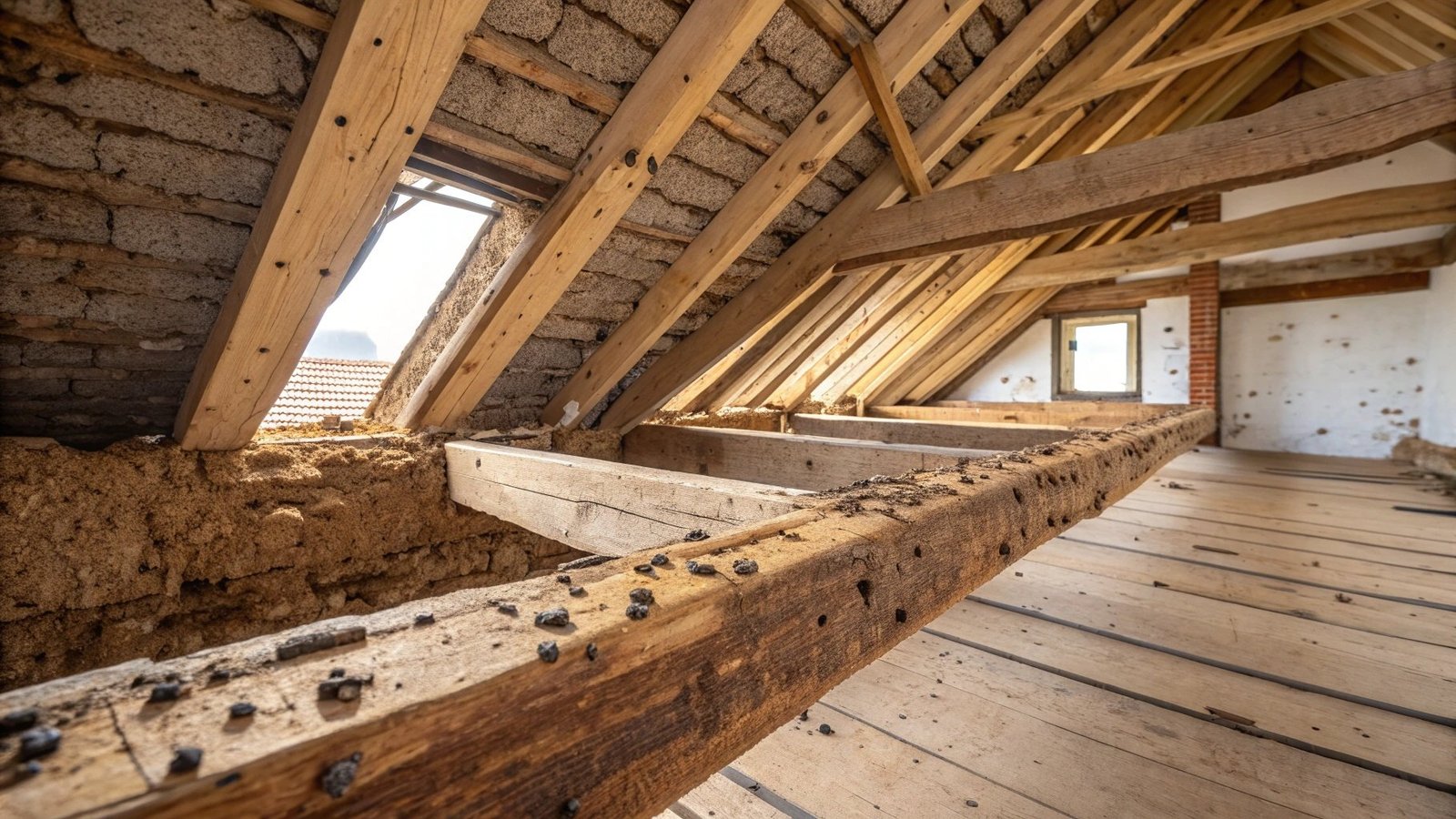
Signs of woodworm infestation include small round exit holes typically 1 to 2mm diameter, fine wood dust around holes or on surfaces below, weak or damaged timber that crumbles easily, dead beetles near affected timber, and in severe cases, visible larvae in the wood.
Not all woodworm holes indicate active infestation. Holes might be decades old with no current beetle activity. During a property survey, our surveyors assess whether infestation is active by looking for fresh, light-colored dust around holes, fresh exit holes with sharp edges, live beetles or larvae, and signs of recent damage to timber.
Active woodworm treatment involves applying specialist insecticide to all affected and surrounding timber, treating all accessible timber in affected areas as a precaution, replacing seriously damaged structural timber, and in some cases, fumigation for severe infestations. Treatment costs for an average three-bedroom house typically range from £1,000 to £2,500 including a guarantee, though extensive damage requiring timber replacement costs significantly more.
How Surveyors Detect Damp and Timber Problems
Professional property surveyors use various methods to detect and assess damp and timber defects during home surveys. Electronic moisture meters measure moisture content in walls and timber, with readings above 20 percent indicating potential problems. Visual inspection identifies obvious signs like staining, mold growth, and damaged timber. Physical testing involves using a bradawl or probe to test timber soundness. Thermal imaging cameras can detect hidden damp in some cases. The surveyor's experience recognizes patterns and combinations of symptoms indicating specific problems.
For properties with suspected serious damp or timber issues, surveyors often recommend specialist surveys by timber and damp specialists who can provide more detailed investigation and treatment specifications.
The Importance of Identifying the Cause
Successfully treating damp and timber problems requires identifying and addressing the underlying cause. Simply treating symptoms without fixing the root problem means issues will recur, often quickly and sometimes more severely than before.
For rising damp, ensure the cause isn't bridged DPC or raised ground levels before expensive injection treatment. For penetrating damp, identify and repair the specific entry point whether failed pointing, damaged rendering, or roof problems. For condensation, address ventilation and heating rather than assuming more serious damp problems. For dry rot and wet rot, eliminate moisture source or the fungi will return. For woodworm, address any damp conditions that might have encouraged infestation.
Cowboy damp-proofing companies sometimes misdiagnose condensation as rising damp to sell unnecessary expensive treatments. Always get a second opinion from a qualified RICS surveyor if you're unsure about a damp diagnosis, particularly if it involves expensive remedial work.
Prevention: Protecting Your Property
Preventing damp and timber problems is far easier and cheaper than treating them after they develop. Regular maintenance helps protect your property. Inspect and maintain guttering and downpipes annually, check roof condition particularly after storms, ensure adequate ventilation throughout the property, maintain external pointing and rendering, keep ground levels below the DPC, ensure extractor fans work in kitchens and bathrooms, address minor leaks promptly before they cause major damage, maintain appropriate heating throughout the property, and ensure adequate airflow in underfloor spaces through functioning air bricks.
Insurance and Guarantees
Professional damp and timber treatment should come with insurance-backed guarantees, typically lasting 20 to 30 years. These guarantees protect you if the problem recurs and can be transferred to future owners, adding value when selling your property.
When commissioning treatment, ensure the company provides an insurance-backed guarantee, clearly specifies what work will be done, explains what the guarantee covers, is registered with relevant trade associations, and provides a detailed specification and quote.
Your building insurance might cover some water damage but typically won't cover gradual deterioration from damp or timber decay. Some policies exclude claims for damp-related damage entirely. Check your policy carefully and notify insurers of any significant damp or timber issues.
When to Walk Away
While most damp and timber problems can be resolved, some situations suggest walking away from a purchase. Extensive dry rot affecting multiple areas indicates serious moisture problems and major expense. Structural timber damage requiring replacement of floor joists or roof timbers represents major work. Damp problems throughout the property rather than localized issues suggest fundamental construction problems. The seller's refusal to address serious identified defects or allow proper investigation means potential hidden problems. When treatment costs approach or exceed the amount you could negotiate off the purchase price, the economics don't work in your favor.
A qualified RICS surveyor can advise whether identified problems are manageable or represent deal-breakers for your particular circumstances.
Conclusion
Damp and timber defects are serious issues that require professional assessment and treatment. Understanding the different types of problems, their causes, and appropriate treatments helps you make informed decisions when buying a property and maintain your home effectively if issues develop.
Never underestimate damp or timber problems. What appears as a small patch of damp or a few woodworm holes might indicate extensive hidden damage. Always commission a professional home survey that includes thorough damp and timber inspection, and follow surveyor recommendations for specialist investigations when necessary.
With proper detection, appropriate treatment, and ongoing maintenance, even properties with historic damp or timber issues can be restored to good condition and provide comfortable, healthy living spaces for decades to come.
Concerned About Damp or Timber Problems?
Our qualified RICS surveyors have extensive experience identifying and assessing damp and timber defects. We provide detailed reports and can recommend trusted specialists for treatment when necessary.
Book Your Survey Today