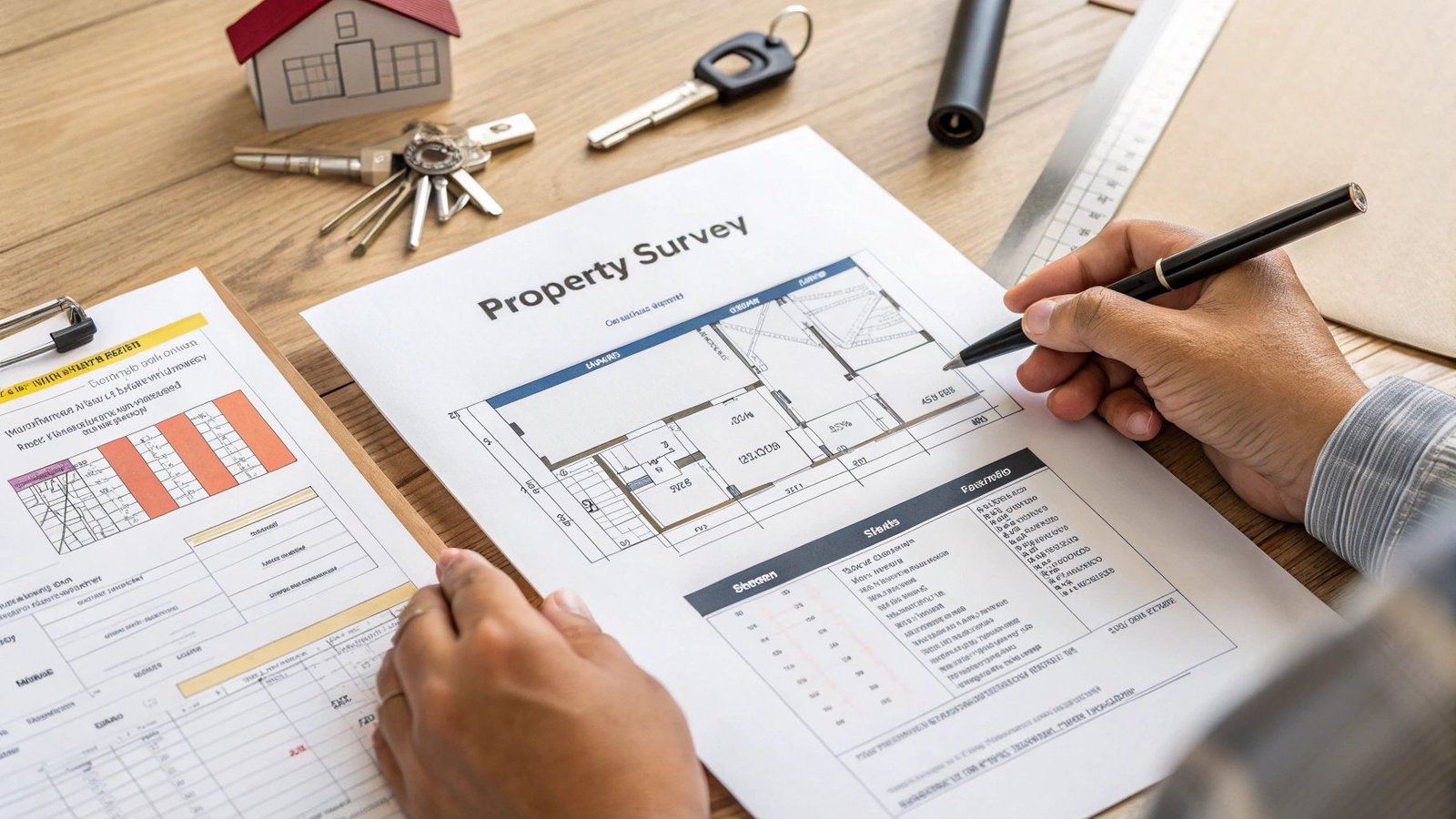
Receiving your home survey report can feel overwhelming, especially if you're a first-time buyer unfamiliar with property surveying terminology. The document might be 20 to 40 pages long, filled with technical terms, condition ratings, and detailed descriptions of defects you never knew existed. However, understanding your survey report is crucial for making informed decisions about your property purchase.
This comprehensive guide will help you interpret your survey report, understand what different ratings mean, identify which issues require immediate attention, and use the information effectively when negotiating with sellers.
Understanding Survey Report Formats
Before diving into the content, it helps to understand that RICS home surveys follow standardized formats. Level 1 surveys typically provide brief condition summaries with traffic light ratings. Level 2 surveys offer more detailed information about the property's condition with recommendations for repairs. Level 3 building surveys include extensive detail about construction, condition, and necessary repairs with cost guidance.
Regardless of which survey type you commissioned, the report structure follows a logical pattern designed to help you understand the property's condition systematically.
The Traffic Light Rating System
Most RICS surveys use a traffic light system to quickly indicate the severity of issues found. Understanding these ratings is essential for prioritizing your response to the survey findings.
Condition Rating 1 shown in green means no repair is currently needed. The property element is performing as intended and should continue to do so. This is what you want to see throughout your survey report.
Condition Rating 2 shown in amber indicates defects that need repairing or replacing but are not considered to be either serious or urgent. The property element must be repaired or replaced but should still continue to function for now. Most properties will have some Rating 2 issues, particularly older homes.
Condition Rating 3 shown in red means defects that are serious and require urgent repair or replacement. The property element is not performing as intended and urgent repair is needed. These are the issues requiring immediate attention and strong consideration during your purchase decision.
Not all issues are assigned these ratings. Some items may be marked as NI meaning not inspected because they were not accessible or visible during the survey. This doesn't mean there's a problem, just that the surveyor couldn't examine that particular element.
Key Sections of Your Survey Report
Understanding how survey reports are organized helps you navigate the document efficiently and find the information most relevant to your decision-making process.
Executive Summary
Most reports begin with an executive summary highlighting the most significant findings. This section provides an overview of serious defects requiring urgent attention, major repair issues affecting the property value, elements that couldn't be inspected, and recommendations for further specialist investigations.
Read this section first. It gives you an immediate sense of whether the survey has identified any deal-breakers or simply routine maintenance issues common for properties of that age and type.
Property Description
This section describes the property's construction, age, and type. It typically covers construction materials used, approximate age of the building, property type and number of rooms, orientation and exposure to weather, and any notable features or characteristics.
Understanding the construction type helps explain why certain issues occur. For example, solid wall properties are more prone to damp than cavity wall construction, while Victorian properties commonly show minor settlement cracks that aren't structurally concerning.
Detailed Condition Report
This is the main body of the survey report, systematically examining each element of the property. The surveyor works through external elements including roof coverings, rainwater pipes and gutters, chimney stacks, main walls, windows and external doors, and other external details.
Internal elements are also covered, including ceilings, walls and partitions, floors, chimney breasts and fireplaces, built-in fittings, internal joinery, and bathrooms and kitchens. Services receive attention too, covering electricity, gas and oil, water and heating, drainage, and other services.
For each element, the surveyor describes what was observed, assigns a condition rating, explains any defects found, and provides recommendations for repairs or further investigation.
Recommendations and Advice
This section summarizes the surveyor's professional recommendations based on their findings. It includes immediate repairs required before purchase or shortly after, repairs needed within the next year or two, ongoing maintenance recommendations, specialist inspections recommended, and potential improvement opportunities.
Pay particular attention to recommendations for specialist surveys. If your surveyor suggests electrical testing, timber surveys, or structural engineer assessments, these should be arranged before completing your purchase.
Understanding Common Surveyor Terminology
Survey reports use specific terminology that may be unfamiliar. Understanding these terms helps you interpret the findings accurately.
When surveyors mention further investigation recommended, it means they've identified potential issues but couldn't fully assess them during the visual inspection. This might require specialist testing or invasive investigation. This phrase doesn't necessarily mean serious problems exist, but rather that the surveyor couldn't rule them out during their inspection.
The phrase beyond economic repair indicates something so deteriorated that repair costs would exceed replacement costs. This typically applies to elements like old boilers, failed windows, or severely damaged roof coverings.
Monitor or monitoring required means the surveyor has noted cracks or defects that should be watched over time to determine if they're active or stable. For minor cracks, monitoring might involve photographing them and checking every few months to see if they're growing.
Life expired or end of serviceable life indicates an element has reached the end of its expected lifespan and should be budgeted for replacement, even if still functioning. This commonly applies to boilers, roof coverings, and heating systems.
Inadequate or non-compliant means something doesn't meet current building regulations or standards. This doesn't necessarily require immediate action for existing properties but might need addressing if you're planning renovations requiring building control approval.
Prioritizing Issues in Your Survey Report
Not all defects identified require immediate attention or should necessarily affect your purchase decision. Learning to prioritize issues helps you focus on what matters most.
Deal with Rating 3 issues urgently. These are serious defects requiring immediate attention. Consider whether you're willing to take on these repairs, factor repair costs into your offer, or walk away if issues are too severe.
Plan for Rating 2 issues within a reasonable timeframe. These repairs aren't urgent but will need addressing at some point. Use them for price negotiation, factor costs into your budget for the first year or two of ownership, and prioritize based on which could deteriorate into Rating 3 if ignored.
Note Rating 1 items for general awareness. These elements are in satisfactory condition but still require ongoing maintenance to prevent future problems.
Follow up on recommendations for specialist surveys immediately. These are essential for fully understanding the property's condition and should be arranged before exchanging contracts.
Using Your Survey Report for Negotiation
A survey report is a powerful negotiation tool when used effectively. For minor issues like decoration or small repairs, you might proceed without negotiation as these are normal for properties of that age. For moderate defects such as roof repairs, damp treatment, or heating system replacement, request a price reduction equivalent to estimated repair costs. Get quotes from relevant specialists to support your negotiation.
For serious structural issues, significant damp problems, or extensive repairs needed, request substantial price reduction to cover all necessary works, insist repairs are completed before completion, or consider walking away if issues are too severe or expensive.
When negotiating, be reasonable and evidence-based. Sellers are more receptive to negotiations supported by the surveyor's professional assessment and specialist quotes than to general complaints about the property's condition.
Questions to Ask Your Surveyor
Don't hesitate to contact your surveyor if anything in the report is unclear. Most surveyors are happy to discuss their findings and provide additional context. Good questions to ask include requests for clarification on specific defects, how urgent certain repairs really are, rough cost estimates for major repairs, whether issues are typical for properties of that age and type, and which defects should most influence your purchase decision.
Your surveyor's experience means they can provide valuable context that isn't always apparent from reading the written report alone.
What Survey Reports Don't Cover
Understanding the limitations of survey reports prevents unrealistic expectations. Standard surveys don't include detailed electrical testing, though obvious deficiencies are noted. Detailed testing of gas appliances and heating systems isn't included. Drains and sewers aren't surveyed unless specifically commissioned. Invasive investigation behind walls or under floors doesn't occur. Areas that are inaccessible, covered, or hidden can't be inspected.
If your surveyor recommends specialist surveys for any of these areas, arrange them before completing your purchase. The additional cost is worthwhile for peace of mind and might save you significant expense by identifying serious issues.
Acting on Your Survey Report
Once you've understood your survey report, take systematic action. Review the entire report carefully, not just the summary. Highlight all Rating 3 issues and recommendations for specialist surveys. Get quotes for significant repairs from relevant contractors. Discuss findings with your solicitor and mortgage broker, as some issues might affect your mortgage approval. Decide whether to proceed with the purchase, negotiate price reduction, request repairs, or walk away. Commission any recommended specialist surveys before exchanging contracts. Factor repair costs into your budget for after purchase.
Remember that few properties are perfect, especially older homes. The survey report provides information to help you make an informed decision, not necessarily to discourage you from buying the property.
Common Misconceptions About Survey Reports
Several misconceptions about survey reports can cause unnecessary stress. A long list of defects doesn't mean the property is terrible. Surveyors must report everything they observe, including minor issues. Most properties, especially older ones, will have multiple items requiring attention. What matters is the severity of the issues, not the length of the list.
Surveyors aren't trying to sabotage your purchase. They're providing professional, objective assessment of the property's condition to help you make an informed decision. Their job is to identify problems, not to decide whether you should buy the property.
Not everything in the survey needs fixing immediately. Many items are noted for your awareness and future planning rather than requiring urgent action. Focus on Rating 3 issues and those affecting safety, weather resistance, or structural integrity first.
Conclusion
Understanding your property survey report is essential for making informed decisions during the buying process. While the document might initially seem daunting, taking time to read it carefully and understand the surveyor's findings provides invaluable information about your potential new home.
Use the traffic light rating system to prioritize issues, don't hesitate to contact your surveyor with questions, and remember that the report is a tool to help you negotiate fairly and budget accurately for any necessary repairs. Few properties are perfect, but with a clear understanding of the property's condition from your survey report, you can proceed with confidence in your purchase decision.
Need Help Understanding Your Survey?
Our qualified RICS surveyors are available to discuss survey reports and answer any questions about your property's condition. We can provide additional context and advice to help you make informed decisions.
Speak to Our Surveyors