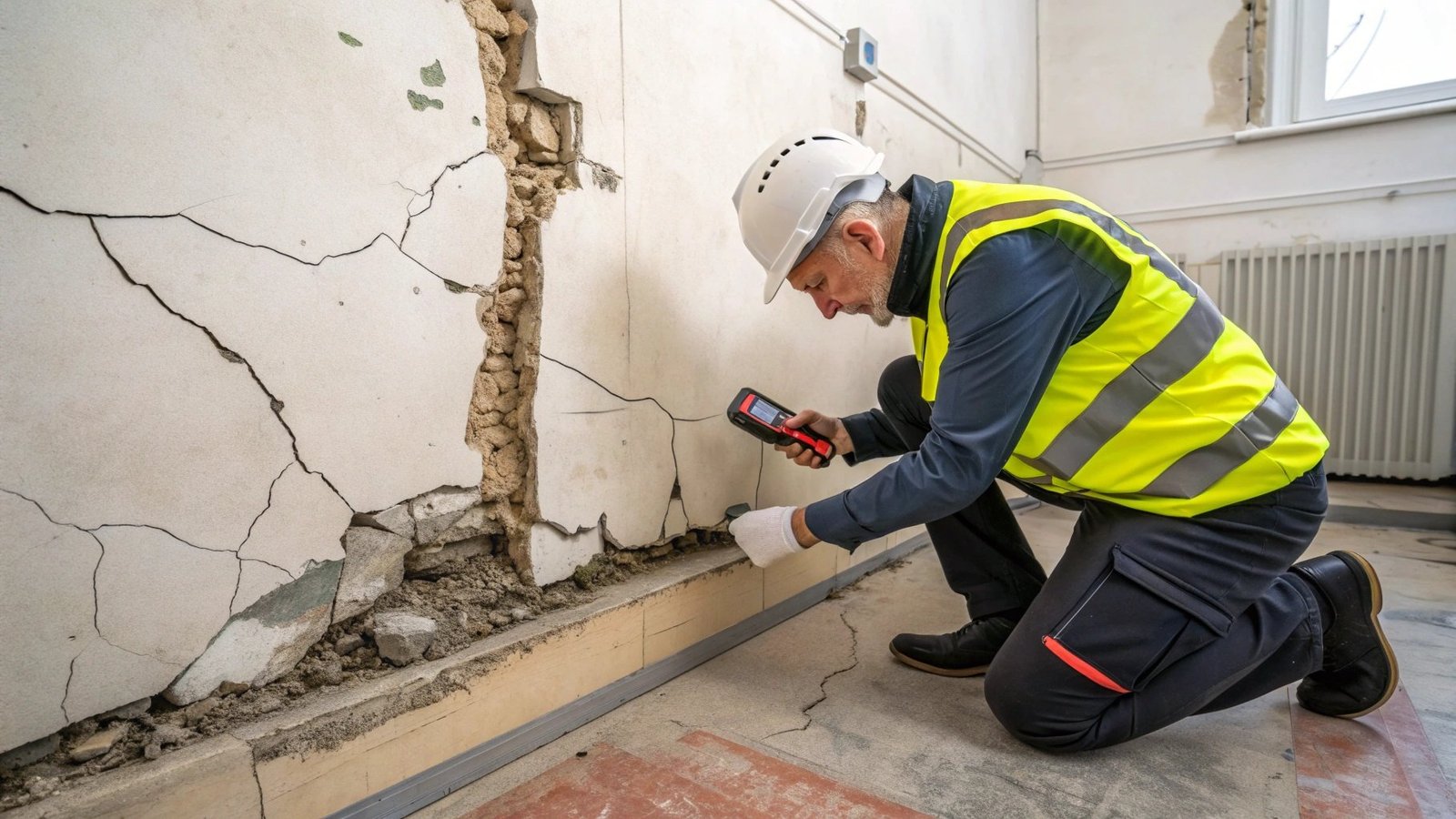
After conducting thousands of property surveys across the UK, our qualified RICS surveyors have identified clear patterns in the types of defects that appear repeatedly in both old and modern homes. Understanding these common issues before you buy a property can save you thousands of pounds and help you make informed decisions during the buying process.
This comprehensive guide examines the ten most frequent problems our chartered surveyors discover during home surveys, explains why they occur, outlines typical repair costs, and advises on how serious each issue really is.
1. Damp and Moisture Penetration
Damp is by far the most common defect identified in UK property surveys, affecting properties of all ages. There are three main types that surveyors look for during inspections.
Rising damp occurs when ground moisture moves upward through walls due to a failed or absent damp-proof course. Signs include tide marks up to one meter high on internal walls, peeling paint or wallpaper at low level, salt deposits on wall surfaces, and a characteristic musty smell. Properties built before 1875 often have no DPC, while those from 1875 to 1960 may have slate DPCs that have failed over time.
Penetrating damp results from water entering through external walls, roofs, or around windows. It's particularly common in exposed locations, properties with solid walls, and areas where external rendering or pointing has deteriorated. Look for damp patches that worsen in wet weather, staining on ceilings below roof areas, and moisture around window frames.
Condensation is the most common form of damp, caused by excess moisture in the air condensing on cold surfaces. Single glazing, poor ventilation, and inadequate heating all contribute to condensation problems. Signs include mold growth on walls and in corners, water droplets on windows, and musty odors.
During a Level 2 or Level 3 survey, your property surveyor uses moisture meters to detect damp levels and identifies the likely cause. Treatment costs vary enormously from £500 for improved ventilation to combat condensation, £2,000 to £5,000 for penetrating damp repairs including repointing and rendering, up to £3,000 to £10,000 for comprehensive rising damp treatment with new DPC injection.
2. Roof Problems and Defects
Roof issues are among the most expensive defects to repair, so thorough inspection during a building survey is essential. Common problems include missing, slipped, or damaged tiles or slates from storm damage or age. Deteriorated or missing ridge tiles allow water entry at the roof apex. Damaged or insufficient flashing around chimneys and roof junctions causes leaks. Old or damaged felt underlays may have perished, and sagging roof lines indicate structural problems.
A qualified surveyor examines the roof using binoculars from ground level and, if safely accessible, will inspect the roof space internally to assess the condition of timbers, insulation, and roof covering from below. They check for signs of previous or current leaks, adequate ventilation to prevent condensation, and structural integrity of roof timbers.
Repair costs depend on severity and can range from £500 to £2,000 for localized repairs and ridge tile replacement, £3,000 to £6,000 for replacement felt and battens under existing tiles, £8,000 to £15,000 for complete roof replacement on a typical semi-detached house, and £15,000 to £30,000 for larger detached properties.
Many buyers negotiate thousands of pounds off the asking price when significant roof works are identified in the survey report.
3. Electrical Installation Issues
Outdated or unsafe electrical systems are flagged in many property surveys, particularly in older homes. While a home survey doesn't include a full electrical test, surveyors identify obvious warning signs.
Common issues include old wiring beyond its safe lifespan, typically 25 to 30 years. Old rubber or fabric-insulated cables are particularly concerning. Insufficient socket outlets leading to dangerous overuse of extension leads pose fire risks. Old-style fuse boxes without modern circuit breakers fail to provide adequate protection. Lack of RCD protection means no rapid disconnection in fault conditions, and aluminum wiring from the 1960s and 1970s requires special attention.
A survey report highlighting electrical concerns typically recommends a full electrical inspection by a qualified electrician before purchase. Complete rewiring of a three-bedroom house costs £3,000 to £6,000, while consumer unit upgrades with RCD protection cost £400 to £800. Additional socket installation runs £80 to £150 per socket.
Serious electrical defects are red flags that require immediate attention and provide strong negotiating leverage on the property price.
4. Structural Movement and Subsidence
Cracks in walls are common, but not all indicate serious problems. A qualified RICS surveyor distinguishes between minor settlement, historic movement that has stabilized, and active subsidence requiring urgent attention.
Warning signs include diagonal cracks wider than 5mm, particularly in external walls, stepped cracking in brickwork following mortar joints, cracks that are wider at the top than the bottom, and internal cracks that correspond to external cracking. Multiple cracks in different areas and doors or windows that stick or won't close properly are also concerns.
The surveyor notes crack locations, widths, and patterns. For concerning cracks, they may recommend monitoring over time or immediate structural engineer assessment. Causes include clay soil shrinkage, typically due to nearby trees, leaking drains washing away supporting soil, inadequate foundations for the building weight, and mining subsidence in certain areas.
Costs depend on severity. Minor crack repairs cost £500 to £2,000, monitoring and assessment by structural engineers cost £500 to £1,500, and underpinning to stabilize foundations costs £10,000 to £50,000 depending on extent.
Active subsidence is one of the few defects that might lead buyers to walk away from a purchase, or at minimum, negotiate substantial price reductions.
5. Timber Defects: Woodworm and Rot
Timber elements throughout properties are susceptible to insect attack and decay. Common issues include woodworm, particularly common furniture beetle, creating small round holes in timber. Active infestation shows fresh, light-colored wood dust. Dry rot is the most serious timber disease, caused by Serpula lacrymans fungus. It spreads rapidly through timber and masonry, causing severe structural damage. Wet rot affects persistently damp timber and while serious, it's less aggressive than dry rot.
During a property survey, the surveyor inspects all accessible timber, including floor joists if accessible, roof timbers in loft spaces, window and door frames, and skirting boards and architraves. They probe suspect areas with a bradawl to test timber soundness and photograph evidence of defects. For serious issues, they recommend specialist timber surveys.
Treatment costs vary widely. Woodworm treatment for an average house costs £1,000 to £2,000. Wet rot repairs including affected timber replacement cost £2,000 to £5,000. Extensive dry rot treatment including all affected timber and masonry sterilization can cost £5,000 to £20,000 for severe infestations.
Timber defects shouldn't necessarily deter you from buying a property, but understanding the extent and cost of treatment is essential for informed decision-making.
6. Drainage and Guttering Problems
Poor drainage systems cause water damage to buildings and are commonly identified in surveys. Blocked or damaged gutters and downpipes allow water to overflow onto walls. Cracked or collapsed drainage pipes let water escape into surrounding ground. Inadequate falls on drains prevent proper water flow. Missing or damaged gully grids allow debris into drains, and tree roots infiltrating drainage systems cause blockages and damage.
The surveyor inspects external drainage as far as visible, including gutters, downpipes, and gullies. They look for water staining on walls below gutters, standing water around the property, damp patches on external walls, and evidence of previous drainage problems. For properties with suspected serious drainage issues, they may recommend a CCTV drain survey.
Repair costs include gutter and downpipe replacement at £400 to £1,200, drain repairs or replacement at £1,000 to £3,000 per section, and CCTV drain surveys costing £150 to £300.
While not usually deal-breakers, drainage issues identified in surveys provide legitimate grounds for price negotiation.
7. Window and Door Problems
Windows and doors suffer from wear, weather exposure, and sometimes inappropriate replacement. Rotten timber frames, particularly sills exposed to weather, allow water penetration. Broken or failed double glazing with condensation between panes indicates seal failure. Ill-fitting or damaged UPVC windows often result from poor installation. Broken sash cords in traditional windows prevent operation, and damaged or inadequate security features pose risks.
The surveyor checks all accessible windows and doors for condition, operation, and security. They note rot in timber frames, failed double glazing units, and damaged seals and ironmongery. They assess draughtproofing and energy efficiency.
Costs vary. Timber window repairs including rot treatment cost £200 to £500 per window. Sash window overhaul costs £300 to £800 per window. Double glazing unit replacement costs £100 to £300 per unit. Complete window replacement runs £500 to £1,500 per window depending on size and quality.
8. Chimney and Fireplace Issues
Even in properties where fireplaces aren't used, chimneys require maintenance. Leaning or unstable chimney stacks pose safety risks. Deteriorated pointing allows water penetration. Missing or damaged chimney pots and flaunching allow rain entry. Vegetation growing from chimneys indicates neglect. Uncapped unused flues allow rain and debris entry, and cracked or spalling brickwork requires attention.
The surveyor examines chimney stacks with binoculars, checks flashing at chimney base, and inspects internal chimney breasts for damp or structural issues. If fireplaces are in use, they note whether adequate ventilation exists.
Chimney repointing typically costs £800 to £2,000. Stack rebuild work runs £2,000 to £5,000. Flashing repairs cost £300 to £800. Chimney removal if no longer needed costs £1,500 to £3,000.
9. Insulation and Energy Efficiency Deficiencies
While not defects in the traditional sense, poor insulation and energy efficiency are increasingly important. Missing or insufficient loft insulation should be at least 270mm depth. Lack of cavity wall insulation in suitable properties wastes energy. Single glazing offers poor thermal performance. Uninsulated hot water cylinders and pipework lose heat. Inefficient or outdated boilers increase running costs.
The surveyor notes energy efficiency issues and may reference the property's Energy Performance Certificate. They identify opportunities for improvement that could reduce heating costs and increase comfort.
Improvement costs include loft insulation at £300 to £500, cavity wall insulation at £500 to £1,500, new boiler installation at £2,000 to £3,500, and secondary glazing at £100 to £300 per window.
10. External Rendering and Pointing Defects
External finishes protect the property structure, and their failure allows water penetration. Cracked or blown rendering allows water behind, causing damp. Deteriorated mortar pointing lets water enter walls. Cracking around windows and doors is particularly concerning. Inappropriate cement renders on old solid wall properties can trap moisture, and algae or moss growth indicates persistent dampness.
During the property inspection, the surveyor taps rendered areas to identify hollowness, examines pointing condition throughout, and checks around all openings for cracks. They assess whether render type is appropriate for the building.
Repointing costs £30 to £50 per square meter. Render repairs cost £40 to £60 per square meter. Complete re-rendering costs £50 to £100 per square meter.
How to Use Your Survey Report Effectively
When you receive your comprehensive survey report, don't panic if it lists multiple defects. Few properties are perfect, and your surveyor's job is to identify all issues, not just serious ones. Focus on Category 2 (repairs needed) and Category 3 (urgent repairs) items first. Get quotes for significant repairs from relevant specialists. Use repair costs to negotiate price reduction or request repairs before completion. Consider which issues you can live with versus those requiring immediate attention.
Remember that the house survey cost of £600 to £1,500 often saves you thousands by identifying problems before you commit to purchase.
Conclusion
These ten common defects appear regularly in property surveys across the UK. Some are minor and easy to address, while others are serious and expensive to repair. The key is understanding what you're dealing with before buying the property.
A comprehensive home survey by a qualified RICS surveyor provides essential information about the property's condition. Whether the report reveals minor maintenance needs or more significant problems, you'll have the knowledge needed to make an informed decision about proceeding with the purchase and at what price.
Don't be discouraged if your survey identifies defects. With proper information and realistic repair cost estimates, you can negotiate a fair purchase price that reflects the property's true condition and budget appropriately for necessary works.
Protect Your Property Investment
Don't risk buying a property without knowing its true condition. Our qualified RICS surveyors conduct thorough inspections and provide detailed reports identifying all defects.
Book Your Survey Today